
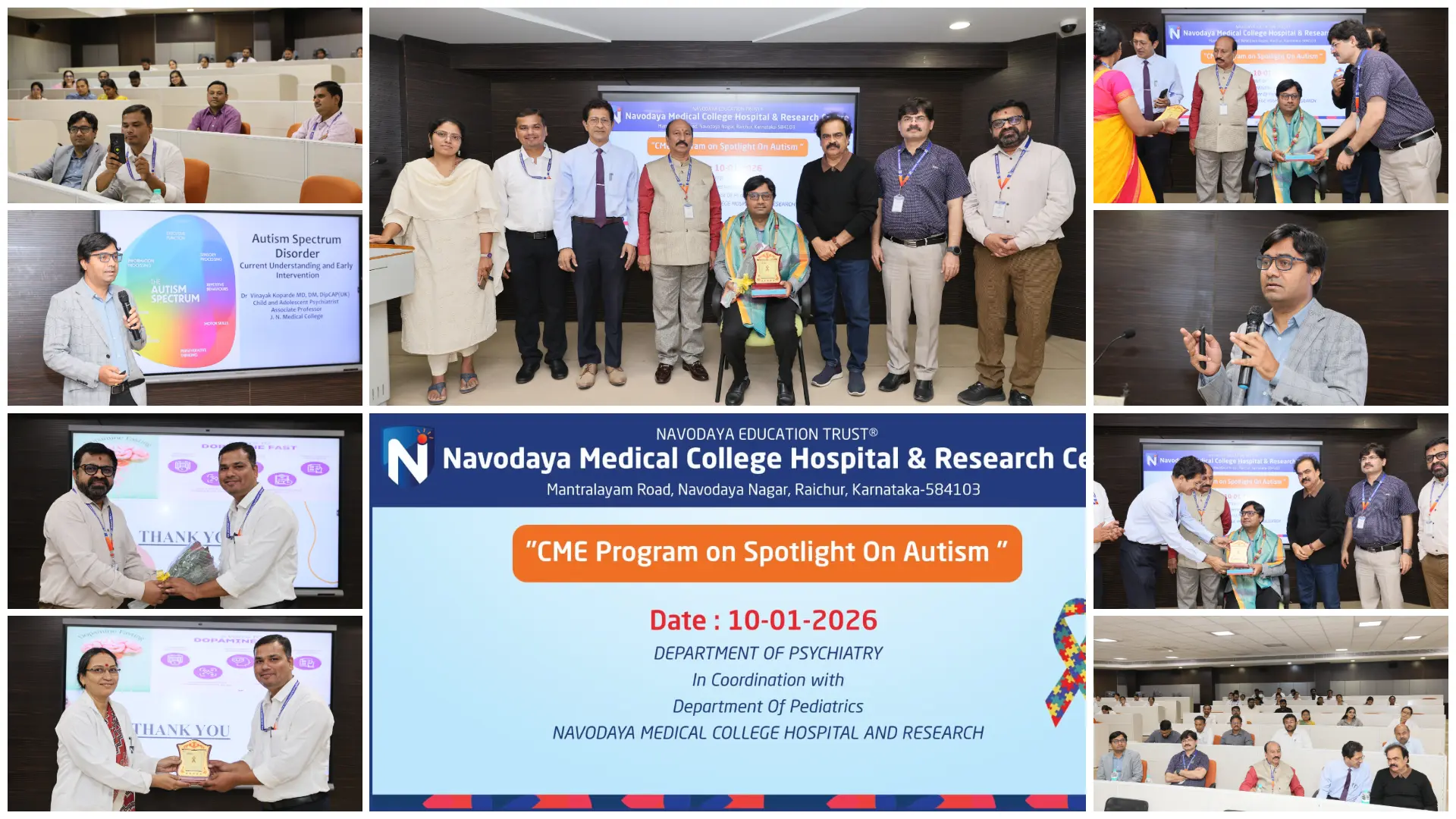

Psychiatry CME Programme at Navodaya Medical College was organized by the Department of Psychiatry, Navodaya Medical College, Raichur, on January 10, 2026, at the A.V. Library Hall. The Continuing Medical Education (CME) programme was thoughtfully designed to enhance clinical knowledge, promote early diagnosis, and strengthen evidence-based mental healthcare practices among clinicians, postgraduate students, and faculty members.
The programme addressed two highly relevant and contemporary themes in mental health practice: early identification and intervention in Autism Spectrum Disorder, and the growing impact of screen time on the developing brain. Through expert-led sessions and academic discussions, the Psychiatry CME Programme at Navodaya Medical College successfully highlighted the importance of timely intervention, responsible digital habits, and informed psychiatric care.
Psychiatry CME Programme at Navodaya Medical College – Program Overview
The Psychiatry CME Programme at Navodaya Medical College served as an important academic platform for mental health professionals to update their knowledge on evolving psychiatric challenges. Conducted in a structured and engaging manner, the programme focused on translating theoretical concepts into practical clinical applications.
Faculty members, clinicians, and students actively participated in the sessions, making the programme both interactive and academically enriching. The sessions emphasized recent research findings, clinical case perspectives, and best practices in psychiatry, aligning with the goal of continuous professional development.
By addressing developmental disorders and digital behavioral concerns, the Psychiatry CME Programme at Navodaya Medical College reflected the department’s commitment to keeping pace with emerging mental health trends and improving patient-centered care.
Importance of Psychiatry CME Programme at Navodaya Medical College
The importance of the Psychiatry CME Programme at Navodaya Medical College lies in its role in strengthening clinical insight and promoting lifelong learning among healthcare professionals. Psychiatry is a rapidly evolving field, and continuous education is essential to ensure accurate diagnosis, effective treatment, and holistic patient management.
This CME programme emphasized early recognition of psychiatric and neurodevelopmental disorders, which is crucial for improving long-term outcomes. It also addressed modern lifestyle challenges, such as excessive screen exposure, that significantly influence mental health, especially among children and adolescents.
By organizing such academic initiatives, Navodaya Medical College reinforces its dedication to quality medical education, ethical practice, and community mental health advancement. The Psychiatry CME Programme at Navodaya Medical College also encouraged interdisciplinary learning and evidence-based decision-making in clinical settings.
Spotlight on Autism – Psychiatry CME Programme Insights
One of the key sessions of the Psychiatry CME Programme at Navodaya Medical College focused on Autism Spectrum Disorder (ASD), highlighting the importance of early identification and intervention. The session provided valuable insights into recognizing early behavioral and developmental signs of autism in children.
The discussion emphasized how timely diagnosis and structured interventions can significantly improve communication skills, social functioning, and overall developmental outcomes. Participants were guided through evidence-based screening tools, diagnostic criteria, and intervention strategies relevant to clinical practice.
The Autism-focused session reinforced the role of psychiatrists and pediatric mental health professionals in guiding families, coordinating multidisciplinary care, and supporting long-term developmental planning. The Psychiatry CME Programme at Navodaya Medical College thus contributed meaningfully to improving awareness and clinical competence in managing autism spectrum conditions.
Digital Dopamine – Screen Time Impact Explained in Psychiatry CME Programme
Another major highlight of the Psychiatry CME Programme at Navodaya Medical College was the session on “Digital Dopamine” and the impact of screen time on the developing brain. This session explored how excessive digital exposure affects attention, reward pathways, emotional regulation, and cognitive development.
The discussion focused on the neurobiological mechanisms involved in screen addiction, changes in dopamine regulation, and behavioral consequences observed in children and adolescents. Practical strategies were shared to help clinicians counsel parents and patients on balanced digital use and healthy screen habits.
The session also emphasized the role of mental health professionals in promoting digital well-being and preventive mental healthcare. By addressing this modern challenge, the Psychiatry CME Programme at Navodaya Medical College provided participants with actionable knowledge applicable to everyday clinical practice.
Learning Outcomes of Psychiatry CME Programme at Navodaya Medical College
The Psychiatry CME Programme at Navodaya Medical College achieved several meaningful learning outcomes for participants. Attendees gained enhanced understanding of early autism detection, effective intervention approaches, and the importance of developmental monitoring.
Participants also developed deeper insight into the psychological and neurological effects of screen exposure, enabling them to offer informed guidance to patients and caregivers. The programme strengthened clinical confidence, diagnostic accuracy, and awareness of preventive mental health strategies.
Overall, the Psychiatry CME Programme at Navodaya Medical College proved to be a valuable academic initiative that empowered clinicians and students with updated knowledge, reinforced responsible digital practices, and promoted excellence in psychiatric care delivery.
The Department of Psychiatry continues to play an active role in advancing mental health education through such impactful CME programmes, contributing to improved healthcare outcomes and community well-being.