
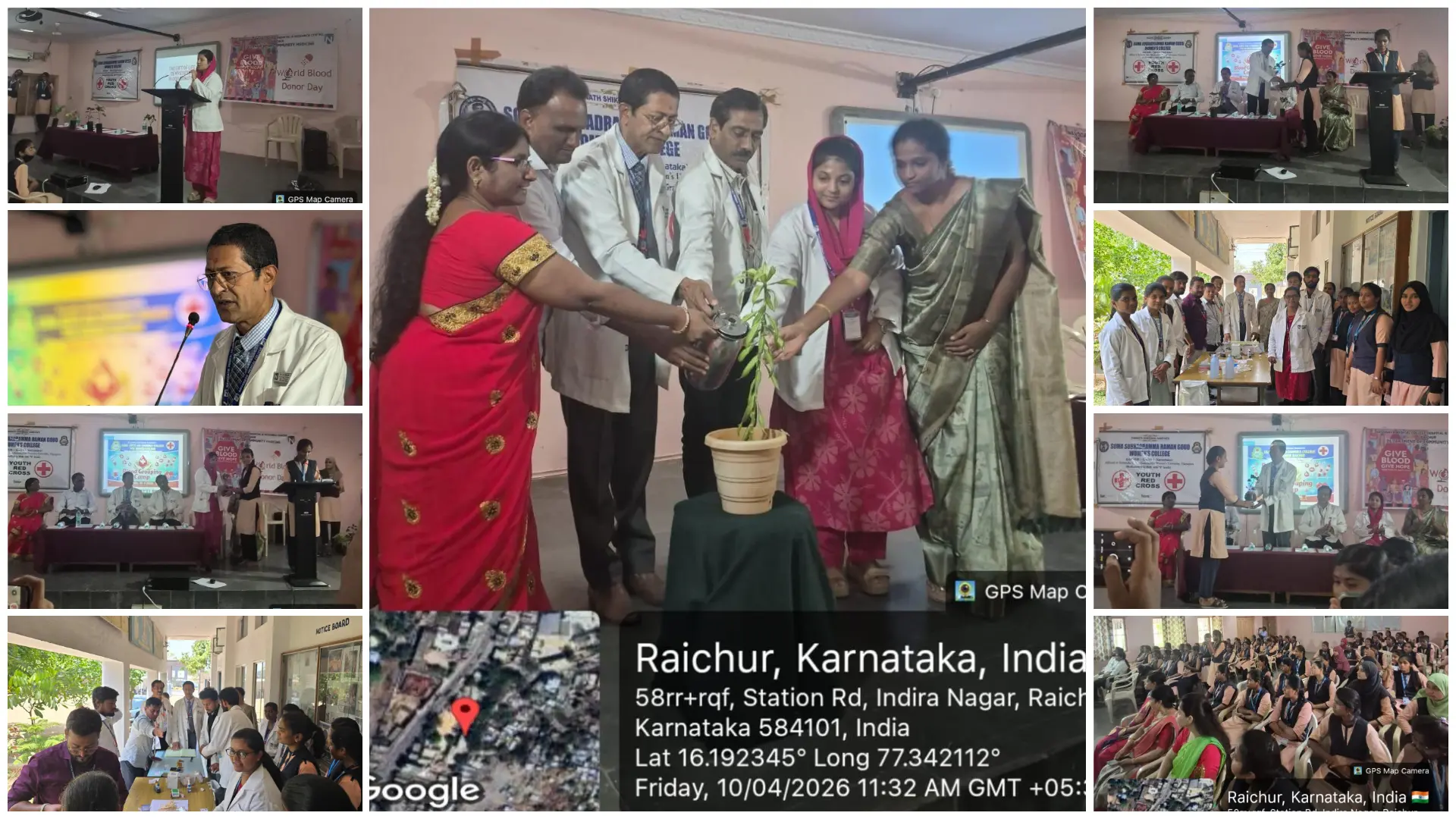

Blood Grouping and Voluntary Blood Donation Awareness Camp
Venue: SSRG Arts & Commerce College for Women, Raichur.
The Blood Centre, Navodaya Medical College Hospital & Research Centre, Raichur, in association with the Department of Community Medicine, organized a “Blood Grouping and Voluntary Non-Remunerated Blood Donation Awareness Camp” on 10 April 2026 at 10:00 AM at SSRG Arts & Commerce College for Women, Raichur.
The program was conducted within the college premises with enthusiastic participation from students and faculty members. The primary objective of the camp was to create awareness about the importance of voluntary blood donation, dispel myths and misconceptions related to blood donation, and motivate students to become regular voluntary blood donors.
The program commenced with a formal welcome and introduction of the speakers by Dr. Roopakala, Assistant Professor, Department of Community Medicine, Navodaya Medical College, Raichur.
This was followed by an informative talk on the importance of voluntary blood donation delivered by Dr. A. S. Aanand, Vice Principal, Professor & Head, Department of Pathology. He highlighted the life-saving significance of timely blood donation and emphasized the urgent need for voluntary non-remunerated blood donors to strengthen the healthcare system and ensure adequate blood availability for patients in need.
Subsequently, Dr. Arshiya, Professor, Department of Community Medicine, delivered a session on blood groups and common myths and misconceptions associated with blood donation. The session addressed prevalent fears among students and helped clarify scientific facts regarding the safety and benefits of blood donation.
A detailed presentation on blood components and their clinical significance was delivered by Dr. Prasanna N, Associate Professor & Medical Officer, Blood Centre. He explained the medical importance and therapeutic uses of various blood components such as packed red blood cells, platelets, and plasma, highlighting how a single unit of donated blood can benefit multiple patients.
An interactive session followed the lectures, during which students actively participated by asking questions. The resource persons addressed these queries, making the session highly engaging and informative.
As part of the camp activities, blood grouping of 150 students was carried out successfully. In addition, 25 students voluntarily registered their names as potential blood donors during the camp.
The program concluded successfully with positive feedback from students and faculty, reflecting increased awareness and a strong willingness among participants to support and participate in voluntary blood donation initiatives.